AI can now generate protein-complex hypotheses in seconds. The hard part is no longer making the prediction. It is knowing which predictions are chemically real. My lab builds chemistry-aware methods to tell them apart, in the cases where metals, glycans, cofactors, and interface energetics decide the answer.
"AI predictions are cheap now. Trustworthy biochemical interpretation is not. That gap, not more prediction, is where my lab works."
One question runs through all of it: when does an AI-predicted structure reflect real biochemistry, and when is it just a confident guess? Every project tests that where chemistry matters most, and pairs computation with experiment.
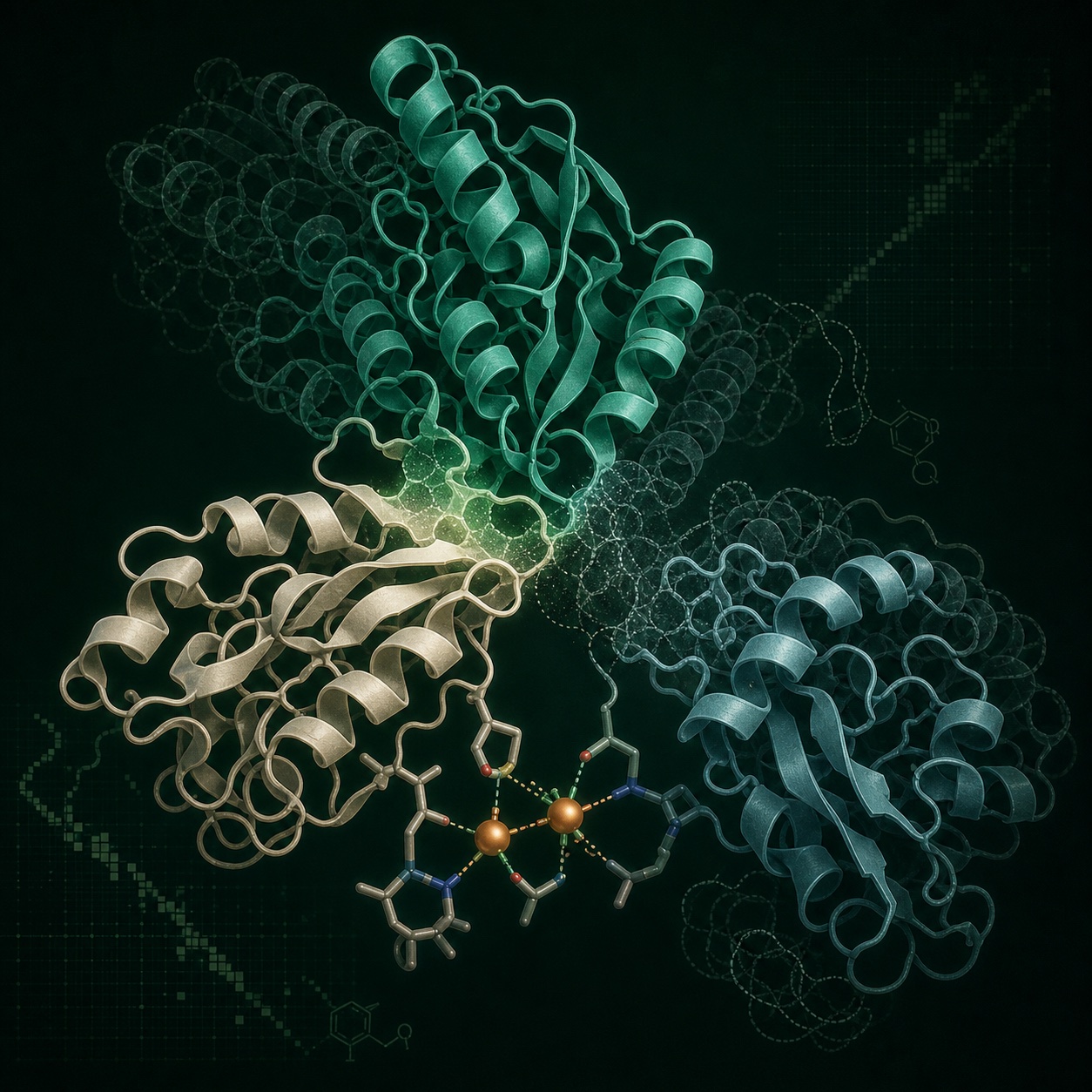
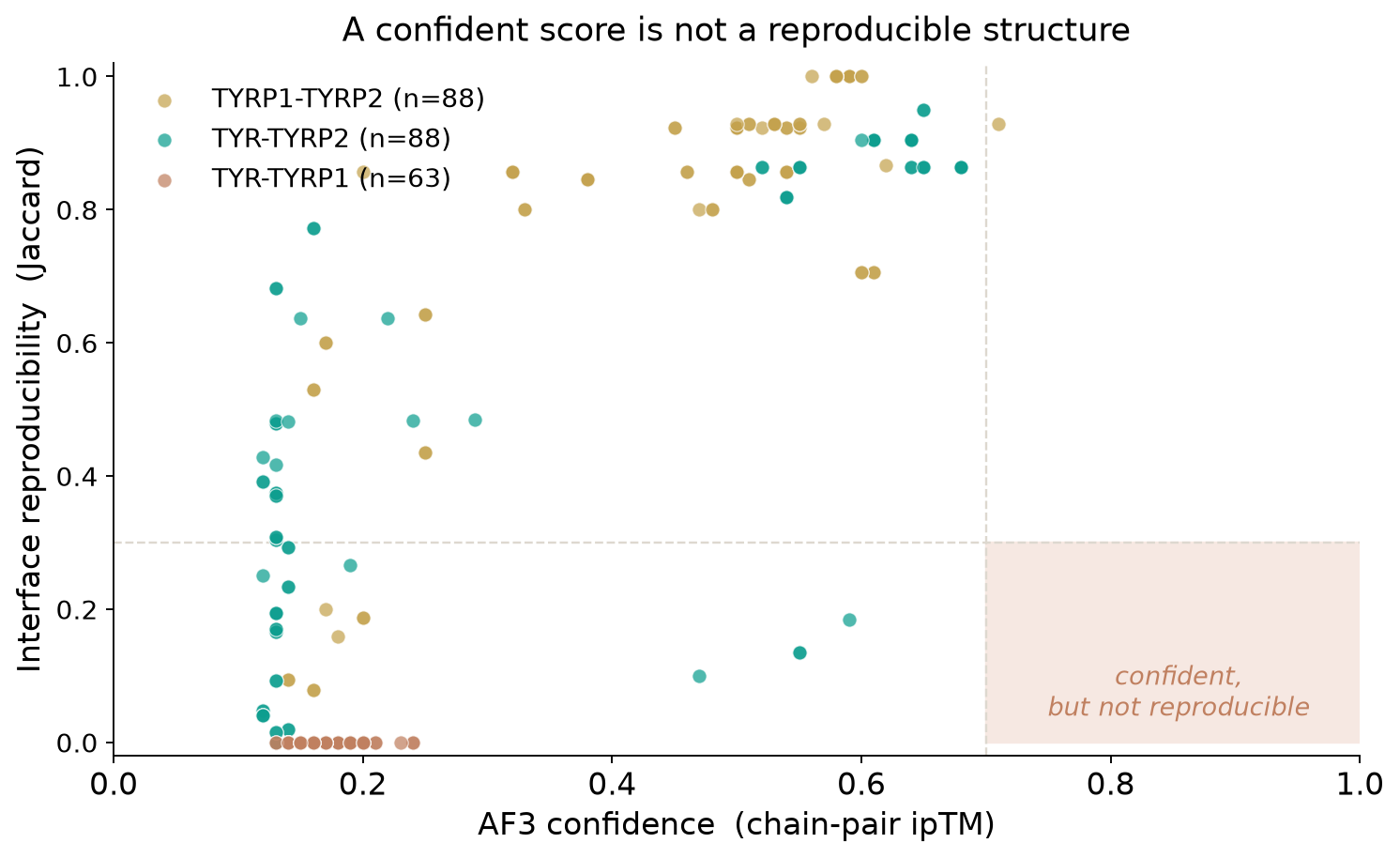
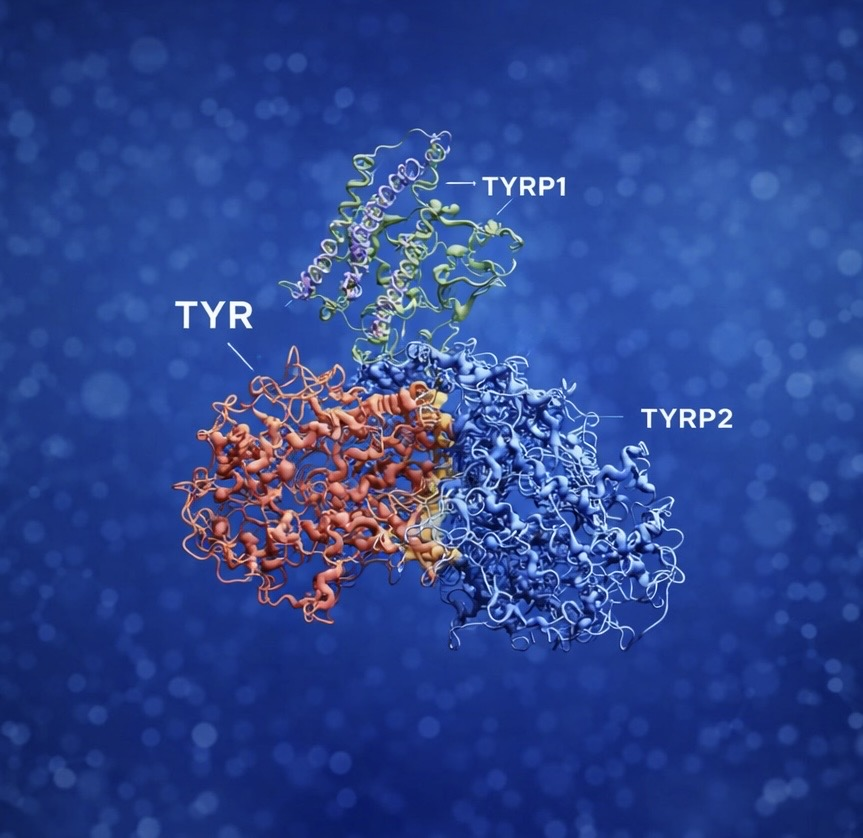
AlphaFold 3 proposes a protein assembly in seconds, but not every prediction is real. We test it where it tends to fail: metal ions, sugar chains, and the randomness from one run to the next. Our system is the melanogenic enzyme complex (TYR-TYRP1-TYRP2), whose assembly underlies albinism and is a drug target in melanoma. Across hundreds of runs the result is consistent: a high confidence score and a structure that reproduces are not the same thing. Telling them apart is the work.
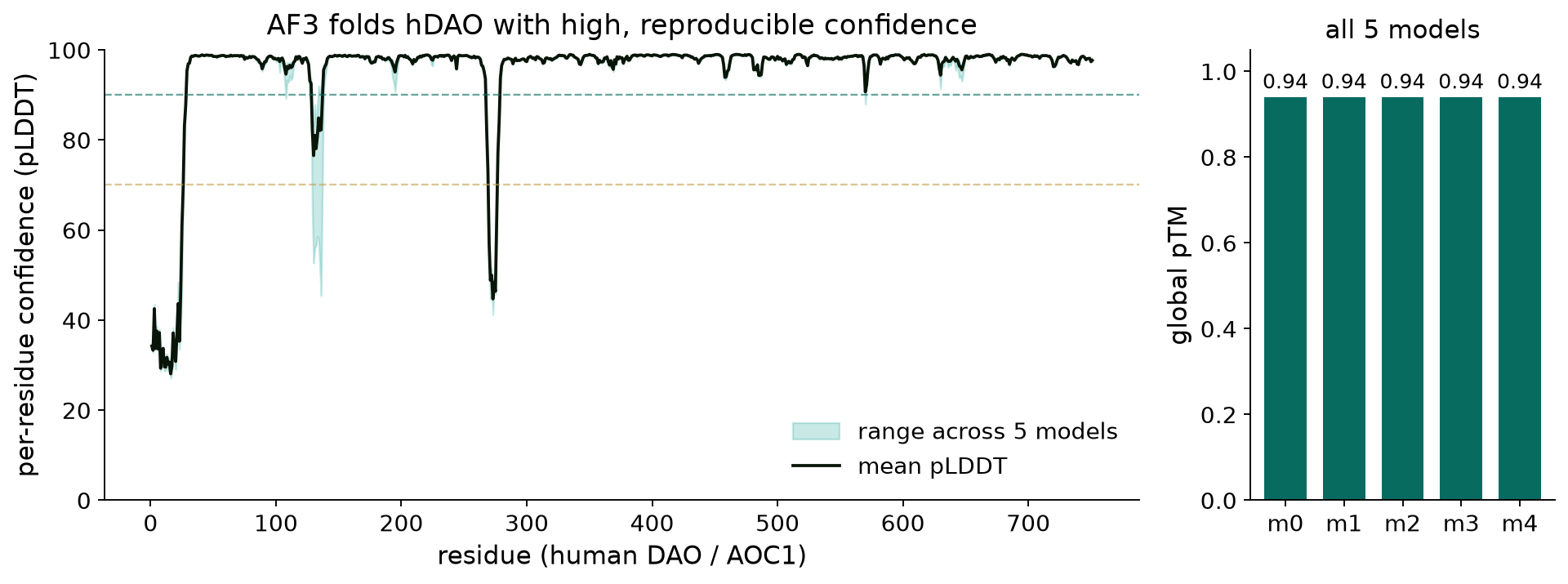
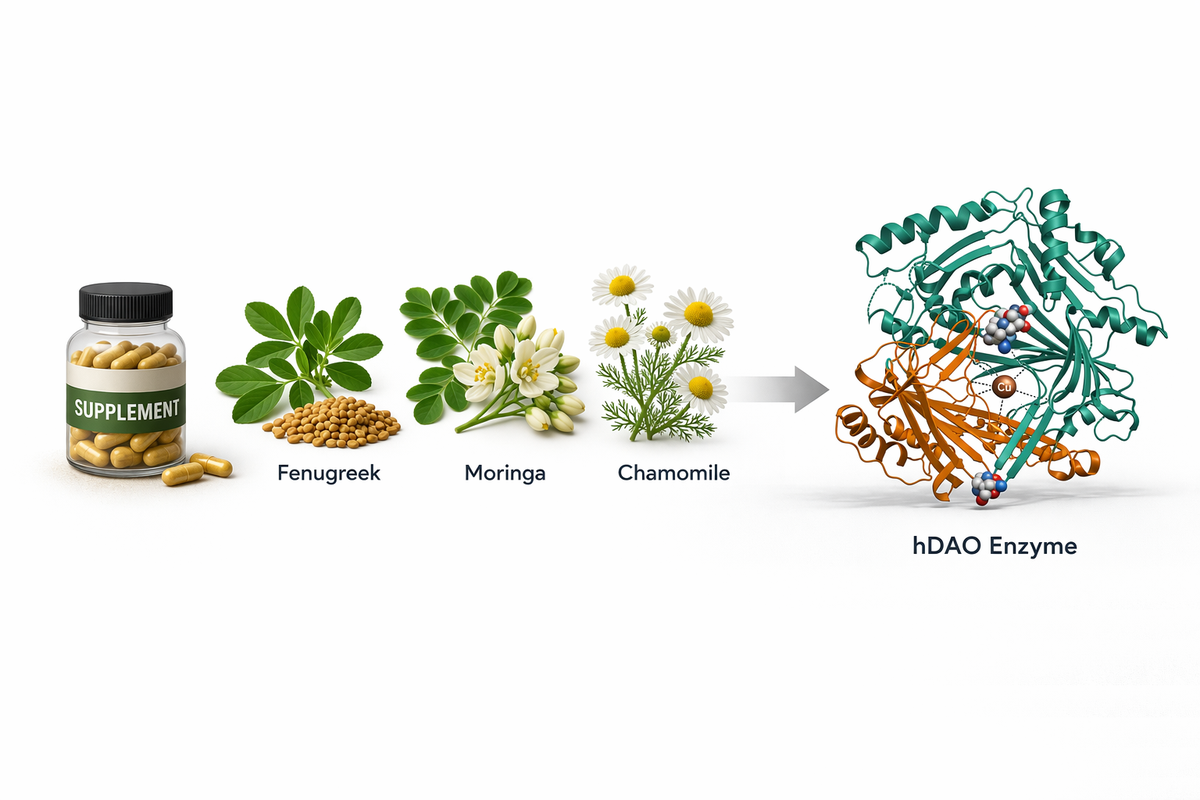
Histamine intolerance affects a large, under-served population, yet the enzyme that clears dietary histamine, human diamine oxidase (hDAO / AOC1), is barely characterized as a diet or drug target. We use AI structure prediction and docking to rank which everyday dietary compounds interfere with it, including terpenes from common herbs and oils that no one has tested against hDAO. This is the focus of our current NIH R15 application. AlphaFold gives us a reliable structure to dock into, and compound screening and enzyme assays are running now.
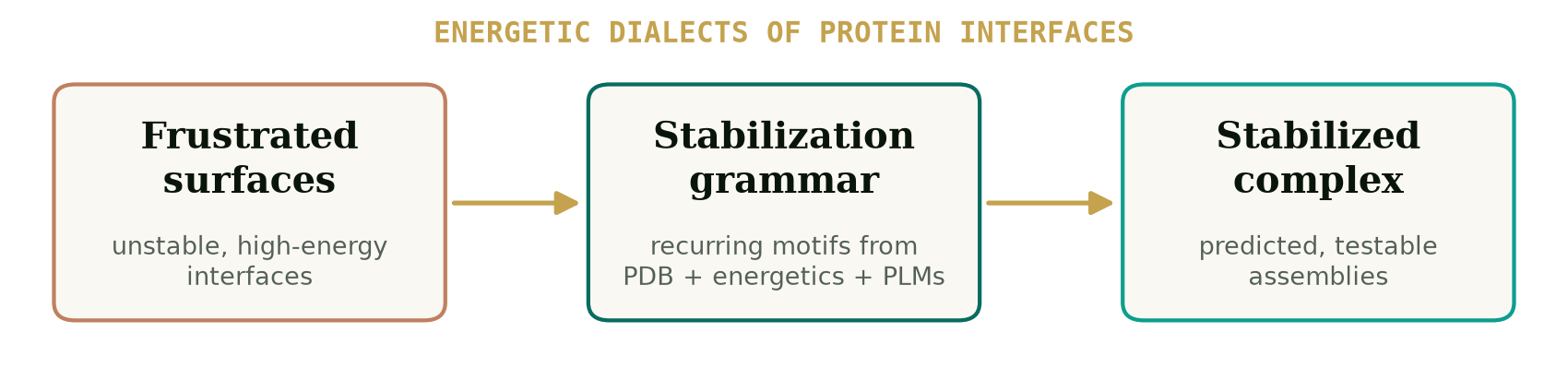
Some protein surfaces are strained and unstable; others lock cleanly into complexes. We are looking for the reusable rules that separate the two: a grammar of stabilization drawn from PDB structures, binding energetics, and protein language models. If those rules transfer, they tell us which proteins will pair stably, and why.
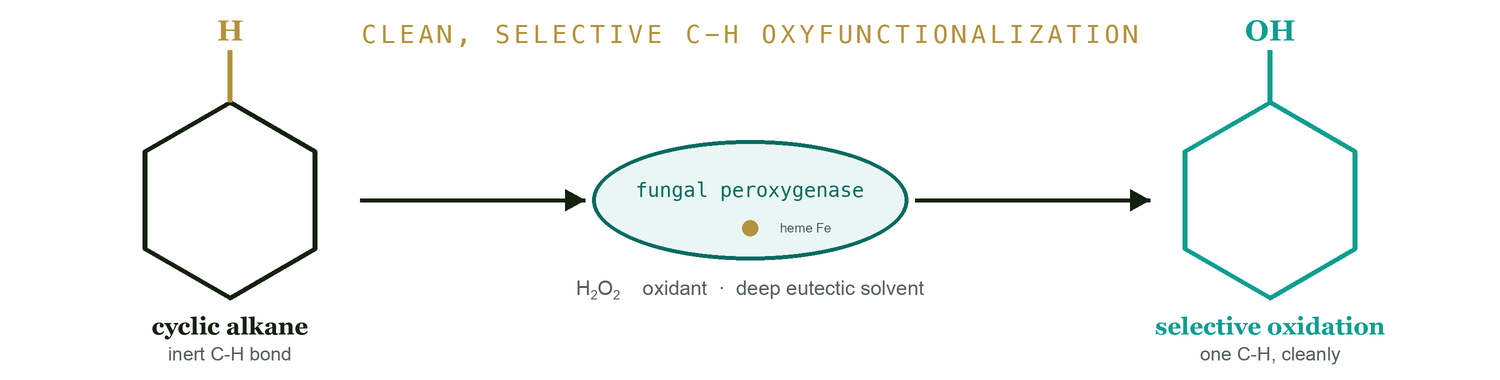
How do enzymes selectively oxidize some of the most inert hydrocarbons, and can they do it in greener solvents? We study fungal peroxygenases and their active-site chemistry for selective C-H oxyfunctionalization of branched and cyclic alkanes in deep eutectic solvents, with an eye toward cleaner chemical manufacturing.
One pipeline runs under every project: an open AlphaFold 3 validation workflow built for the cases where chemistry decides the answer, metals, glycans, cofactors, multi-seed reproducibility, and interface energetics. It is how the lab separates a confident prediction from a chemically real one, and it pairs computation with wet-lab measurement at every step.
Presenting across four ACS divisions in one meeting, spanning structural biology, medicinal chemistry, computational science, and chemical education, including an invited symposium and a Sci-Mix selection.


The lab runs a structured, seven-phase program that takes students with no computational-biology background and moves them, one skill-gated phase at a time, to real work on unpublished problems, conference posters, and co-authorship. It is a system, not ad-hoc apprenticeship: a written manual, a personal electronic notebook for every student, standardized data and quality-control practice, and a mentorship loop with sign-off at every phase.
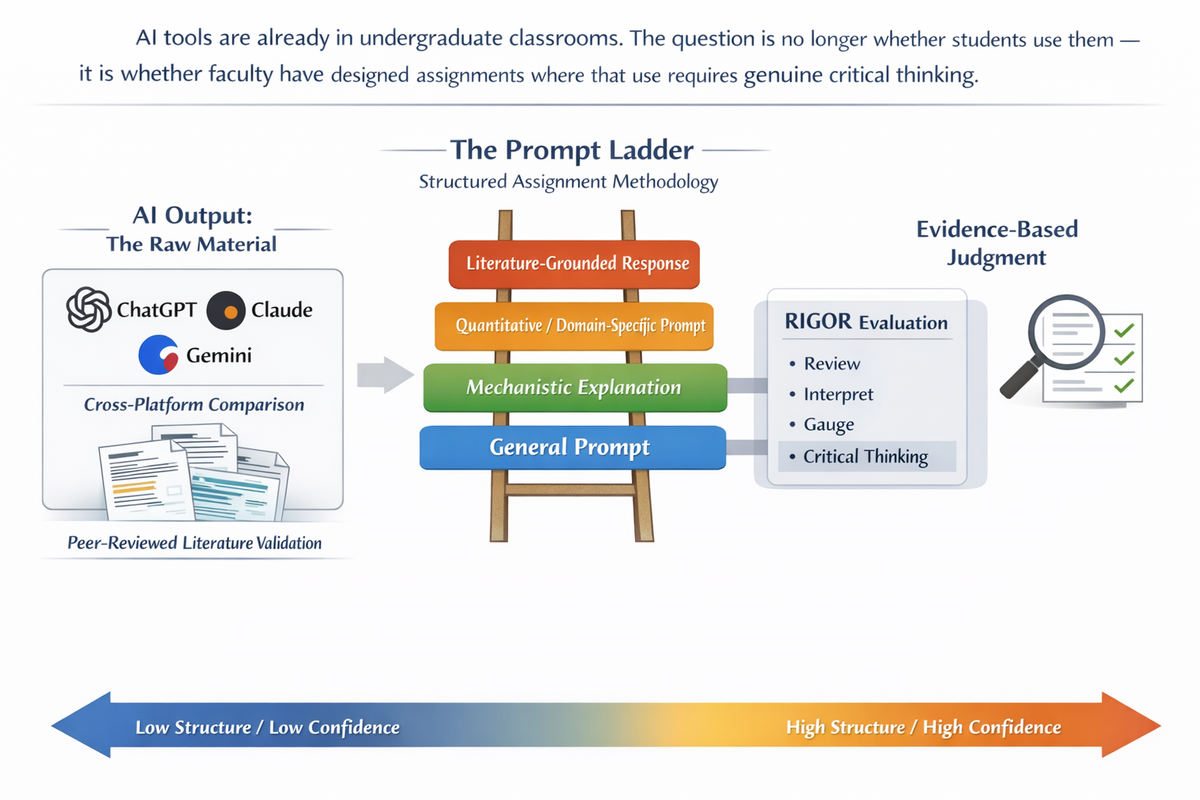
Advanced tracks add AutoDock Vina docking and wet-lab enzyme kinetics. The principle is depth before automation: students do each step by hand and learn to judge an output before they are trusted with the pipeline that produces it. Rigor is a first-class skill here, with pre-registered predictions, blinded scoring, and language that never overstates a result.
By the end, a student can take a project the whole way: from the first paper, through structure prediction and validation, to a conference poster they present under their own name.
Interested in joining? Undergraduate and graduate researchers can apply below. No prior computational-biology experience required.
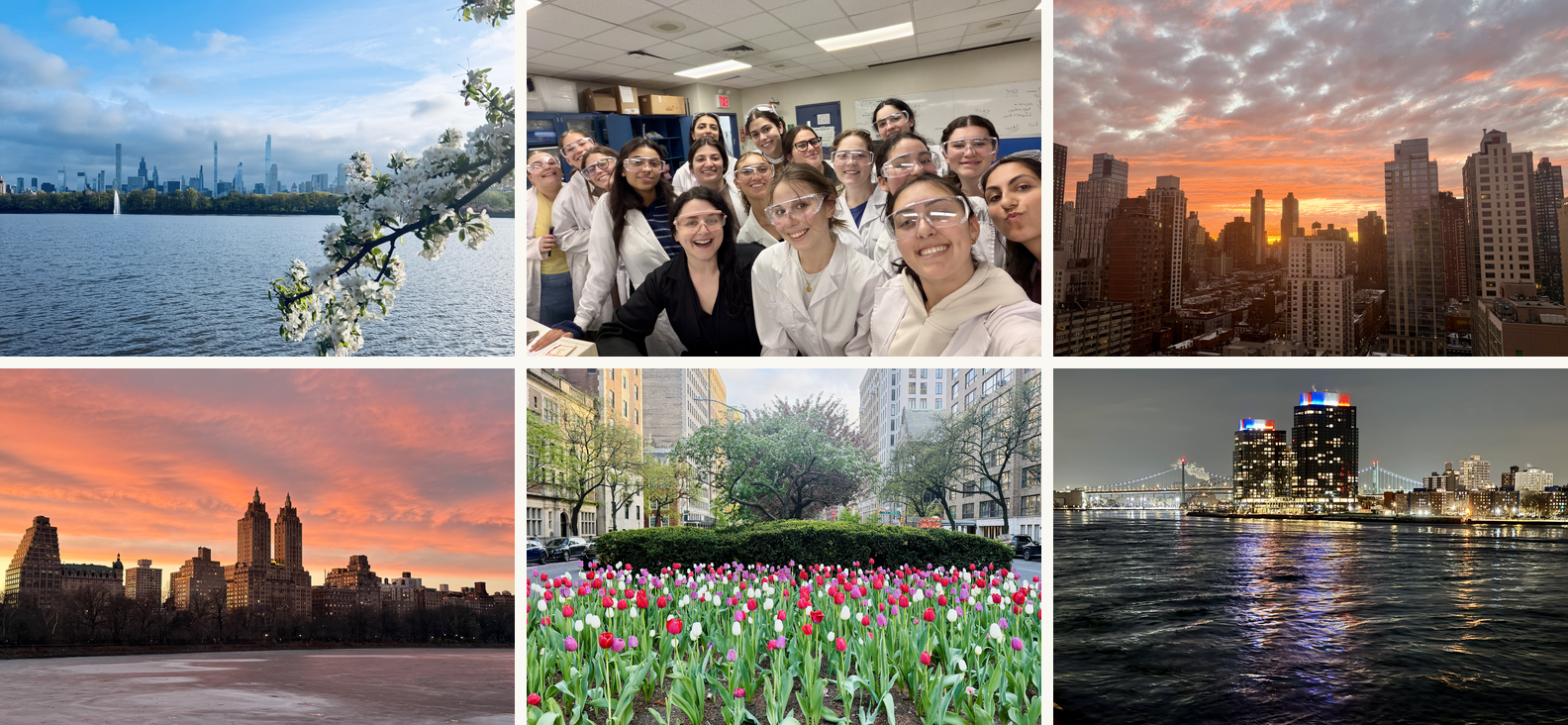
Apply to the lab →The lab trains undergraduate women researchers at Stern College for Women, near-peer co-mentored by MS Biotechnology graduate researchers, a structure that widens access to computational science. The undergraduate cohort is growing, and prospective students are welcome to inquire.
Open to collaborations in chemistry-aware AI validation, structural biology benchmarking, and enzyme mechanism · student research · funding partnerships.
Get in touch